
Job Classification & FLSA Audit
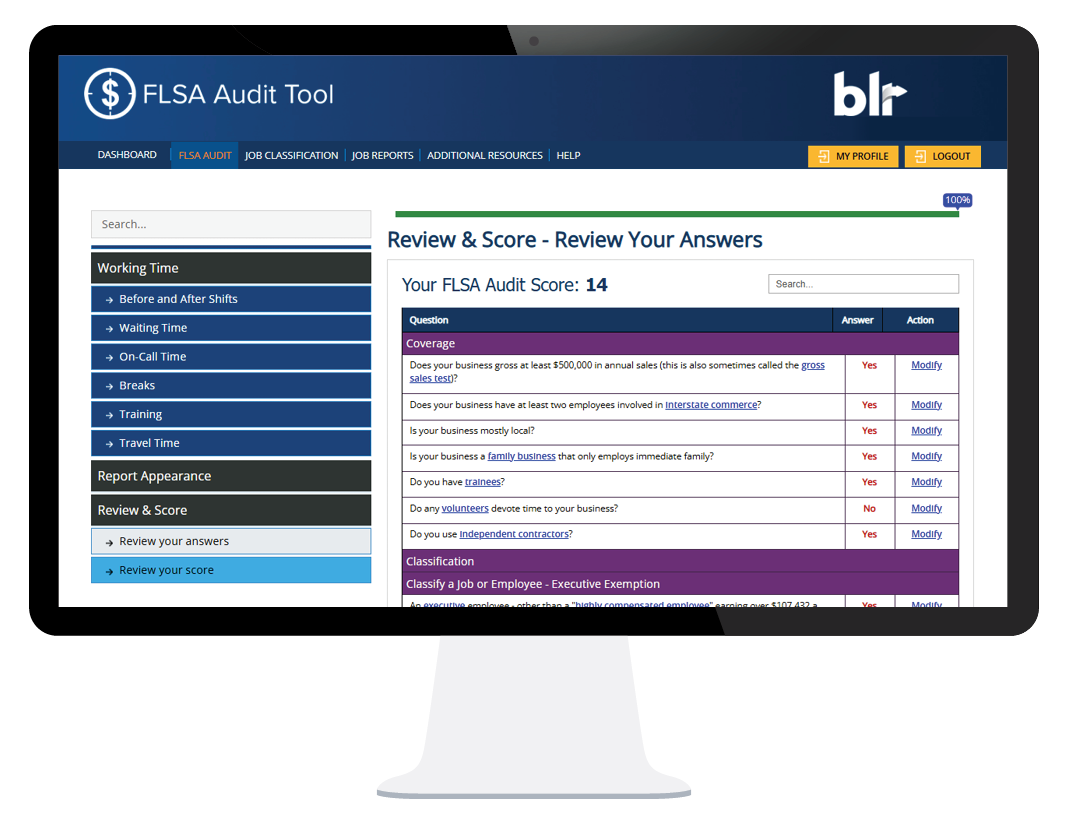

Reduce wage and hour risk with confident classification decisions
FLSA Audit Tool helps HR teams evaluate exempt and non-exempt classifications, document employment decisions, and reduce wage and hour compliance risk with guided workflows and attorney-reviewed guidance.
Why HR teams choose FLSA Audit Tool
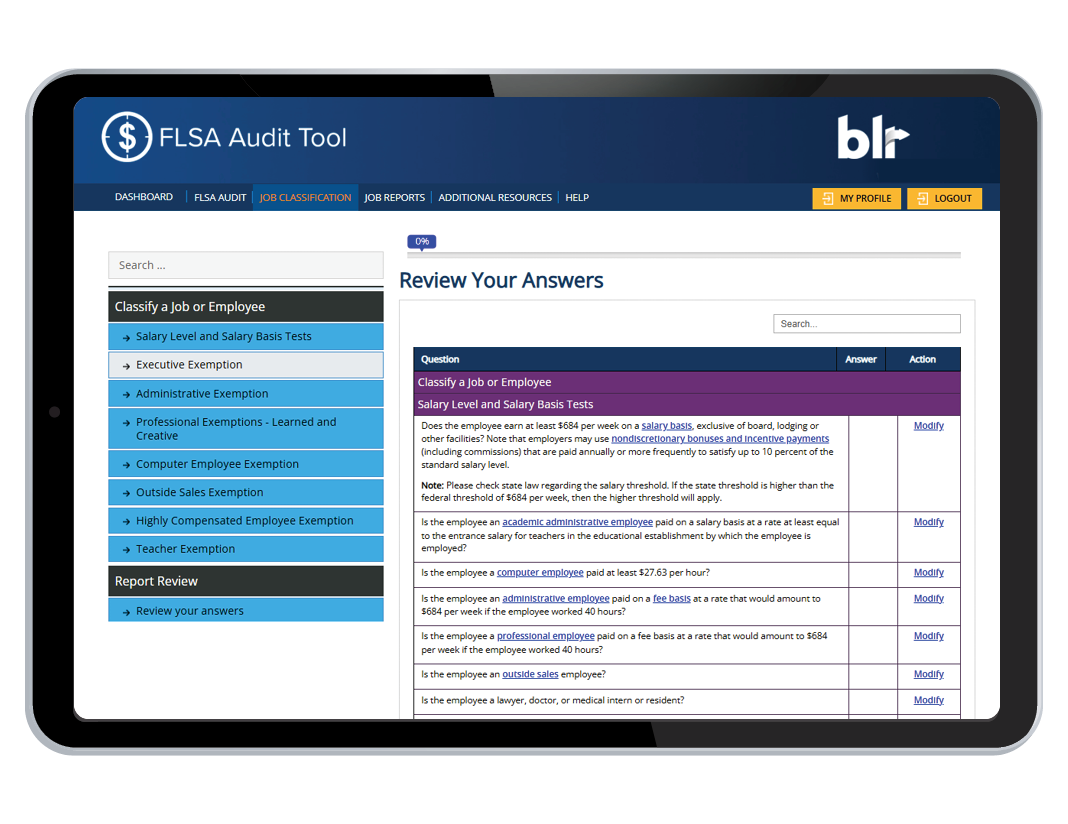
Reduce misclassification risk
Evaluate exempt and non-exempt classifications using structured workflows based on current federal guidance and applicable employment laws.
Document defensible employment decisions
Maintain consistent documentation that supports FLSA classification decisions and provides an audit trail for future reference.
Improve consistency across the organization
Standardize classification reviews across departments and locations using repeatable evaluation criteria and documented processes.
Reduce attorney research for routine reviews
Provide HR teams with guided decision support and attorney-reviewed resources, reducing time spent researching common classification questions.
Key features for FLSA compliance
Evaluate exempt and non-exempt employees
Follow guided workflows to assess employee duties and exemption status based on current FLSA requirements.
Document classification decisions
Capture supporting information and maintain records that help demonstrate a consistent classification process.
Support ongoing compliance reviews
Reevaluate classifications as job duties evolve, organizational structures change, or new positions are created.
Improve collaboration
Share classification reviews with HR leadership and managers to improve consistency across the organization.
Reduce manual research
Access attorney-reviewed guidance that helps HR professionals answer common wage and hour questions more efficiently.
Employee classification analysis to streamline operations and minimize risk
Common ways organizations use FLSA Audit Tool

✔ Review exempt and non-exempt classifications
✔ Evaluate newly created positions
✔ Document FLSA decisions
✔ Support wage and hour compliance reviews
✔ Reduce misclassification risk
✔ Prepare for internal audits
✔ Standardize classification practices
✔ Train HR staff on exemption criteria
Frequently asked questions
How do I classify exempt employees?
FLSA Audit Tool guides HR professionals through structured exemption evaluations using current federal wage and hour requirements to support consistent classification decisions.
How do I document FLSA classification decisions?
The tool helps organizations maintain documentation supporting exemption evaluations, creating a consistent audit trail for future reference.
When should employee classifications be reviewed?
Organizations should review classifications whenever job duties change, new positions are created, compensation structures are updated, or organizational responsibilities shift.
Can FLSA Audit Tool help reduce wage and hour risk?
Yes. By standardizing classification reviews and documenting employment decisions, organizations can reduce the risk of employee misclassification and wage and hour disputes.
What’s the difference between exempt and non-exempt employees?
The distinction depends on factors such as salary basis, salary level, and job duties under the Fair Labor Standards Act (FLSA). FLSA Audit Tool helps HR teams evaluate these factors using guided workflows and attorney-reviewed guidance.