
Electrical safety basics: Common hazards, PPE, LOTO and safe work practices
Introduction
Electricity lights our workplaces, charges our devices, powers machinery, and keeps us warm or cool. However, it can also injure or kill when it’s not properly respected. Every worker should understand basic electrical safe-work practices to avoid accidental contact with energized parts.
Electrical safety starts with recognizing common hazards, using appropriate personal protective equipment (PPE), and proven safety practices to prevent shock, burns, fires, explosions, and other injuries.
Electrical hazards
Electrical hazards can take several forms:
- Electric shock occurs when current passes through the body, potentially causing muscle contractions, loss of control, cardiac arrest, or death (depending on voltage, current, and exposure time).
- Electrical burns can damage tissue and organs, sometimes without immediate visible signs.
- Arc flash and arc blast incidents involve sudden energy release that can cause severe injuries and trigger fires.
Safety practices
Damaged cords, improper installations, and contact with energized equipment can cause serious harm in seconds, so it is important to understand the basics of electricity and the safety practices for working around energized equipment in order to help prevent incidents.
Learn the basics of electricity
Learn concepts like current, voltage, resistance, and the difference between alternating current (AC) and direct current (DC) so you can recognize potential risks. Always assume circuits are energized until properly locked out/tagged out and verified.
Know who is qualified
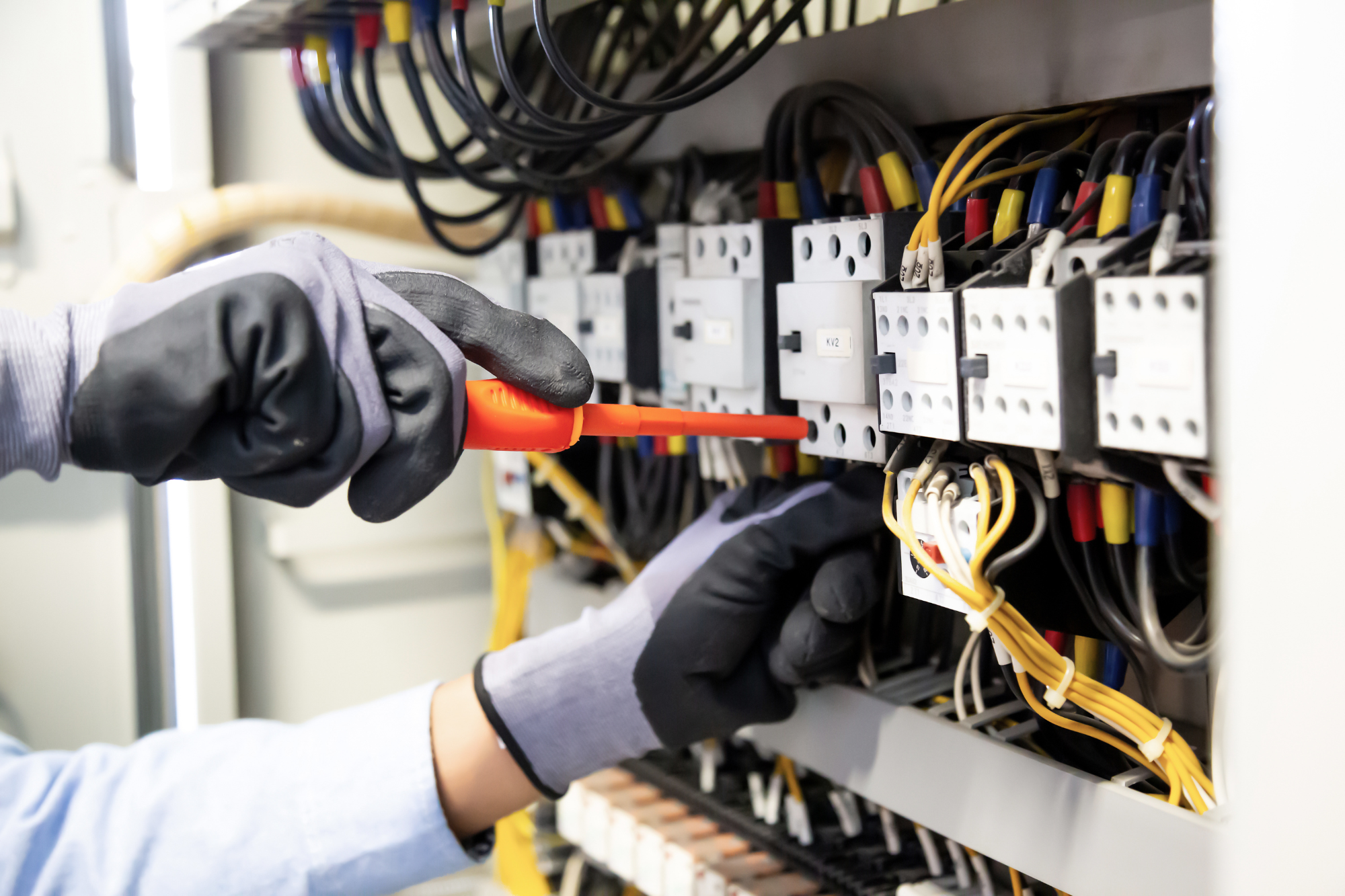
Only trained and authorized (“qualified”) persons should perform electrical work on or near exposed energized parts. These individuals should use insulated tools when appropriate and make sure electrical systems are properly grounded to reduce the risk of unintended current paths through the body.
Wear appropriate PPE
Use insulated gloves, eye/face protection, arc-rated clothing when required, and non-conductive footwear to reduce shock and burn risks.
Inspect cord- and plug-connected equipment
Before each use, check tools, cords, plugs, and fittings for damage, missing grounds, and loose connections.
Keep access to panels clear
Do not block circuit breakers, fuse boxes, disconnects, or electrical panels.
Maintain safe distances
Keep clear of exposed live parts and stay away from overhead power lines and other high-voltage sources.
Avoid wet conditions
Keep electrical equipment away from water and use equipment rated for damp/wet locations when necessary.
Use circuit protection
Use devices such as fuses, circuit breakers, ground fault circuit interrupters (GFCIs), and arc flash circuit interrupters (AFCIs) to interrupt current during overloads, short circuits, arc faults, or ground faults.
Follow control of hazardous energy lockout/tagout (LOTO) procedures
De-energize equipment, apply lockout/tagout, and verify zero energy before servicing or maintenance. This creates an “electrically safe work condition.”
Schedule inspections and maintenance
Periodically inspect wiring, outlets, and equipment and repair or replace damaged components promptly.
Regulations and standards
In the United States, electrical safety expectations are set through a mix of regulation and consensus standards. The Occupational Safety and Health Administration’s (OSHA) electrical standards (e.g., 29 CFR 1910 Subpart S for general industry and 29 CFR 1926 Subpart K for construction) establish baseline compliance obligations, while the National Fire Protection Association (NFPA) 70E provides widely adopted methods for electrical risk assessment, establishing an electrically safe work condition, approach boundaries, and PPE selection. The National Electrical Code (NFPA 70) primarily addresses safe installation. Following these requirements helps ensure electrical systems are installed, operated, and maintained safely.
Key U.S. electrical safety regulations and standards at a glance
Standard Issuing body Primary scope
29 CFR 1910 Subpart S OSHA General industry electrical safety
29 CFR 1926 Subpart K OSHA Construction electrical safety
NFPA 70E NFPA Electrical risk assessment, electrically safe work condition, approach boundaries, PPE selection
NFPA 70 (National Electrical Code) NFPA Safe electrical installation
Training and awareness
Training should be role-based and aligned to your risk profile: qualified-person electrical safety training, awareness training for unqualified workers, and task-specific instruction for contractors and maintenance teams. Reinforce learning through refresher training, job briefings, audits/observations, and periodic program reviews, especially after changes to equipment, incidents, or near misses. All employees working around electrical equipment should have a basic understanding of common electrical hazards, safe tool use, emergency response, and basic first aid for electrical injuries.
Key takeaway
By applying these principles—recognizing hazards, using safe practices, following appropriate regulations and standards, and training workers—organizations can reduce risk, prevent incidents, and keep electrical systems safe in workplaces and industrial environments.
Our free electrical safety toolkit is a strong training resource to support a workplace electrical safety program.