Risk Assessment
EHS risk assessment software that helps safety teams identify hazards, score risk, and prioritize corrective actions.
Key benefits of Risk Assessment
Identify and prioritize workplace hazards
Capture hazards, evaluate severity and likelihood, and prioritize actions to reduce risk before incidents occur.
Improve safety and compliance performance
Support OSHA-aligned safety programs by documenting risk assessments, control measures, and ongoing improvement efforts.
Faster, more consistent risk evaluations
Standardize risk assessment workflows across locations with templates and custom forms built for real-world safety teams.
Better decision-making with risk visibility
Use centralized tracking to identify recurring hazards, high-risk activities, and trends that require corrective action.
Stronger cross-team communication
Share assessments and supporting documentation across departments to improve accountability and speed up mitigation.
Why safety teams use Risk Assessment
Risk Assessment helps organizations move from reactive incident response to proactive safety risk management. By standardizing hazard identification, improving documentation, and making risk visible across teams, EHS Hero supports stronger prevention strategies and more defensible compliance programs.
Risk Assessment features
Reduce risk faster with structured hazard identification and consistent risk scoring with tools designed for hazard analysis, risk scoring, and continuous improvement.
Build risk assessments
Quickly create risk assessments using built-in templates or custom forms to support job hazard analysis (JHA/JSA), task-based risk reviews, and program-level hazard evaluations.
Upload supporting documentation
Attach files, images, and documents to provide clear evidence of hazards, controls, and site conditions.
Track risk mitigation actions
Monitor corrective actions and follow-up efforts in one centralized location to measure progress and reduce repeat risk.
Filter for faster reporting
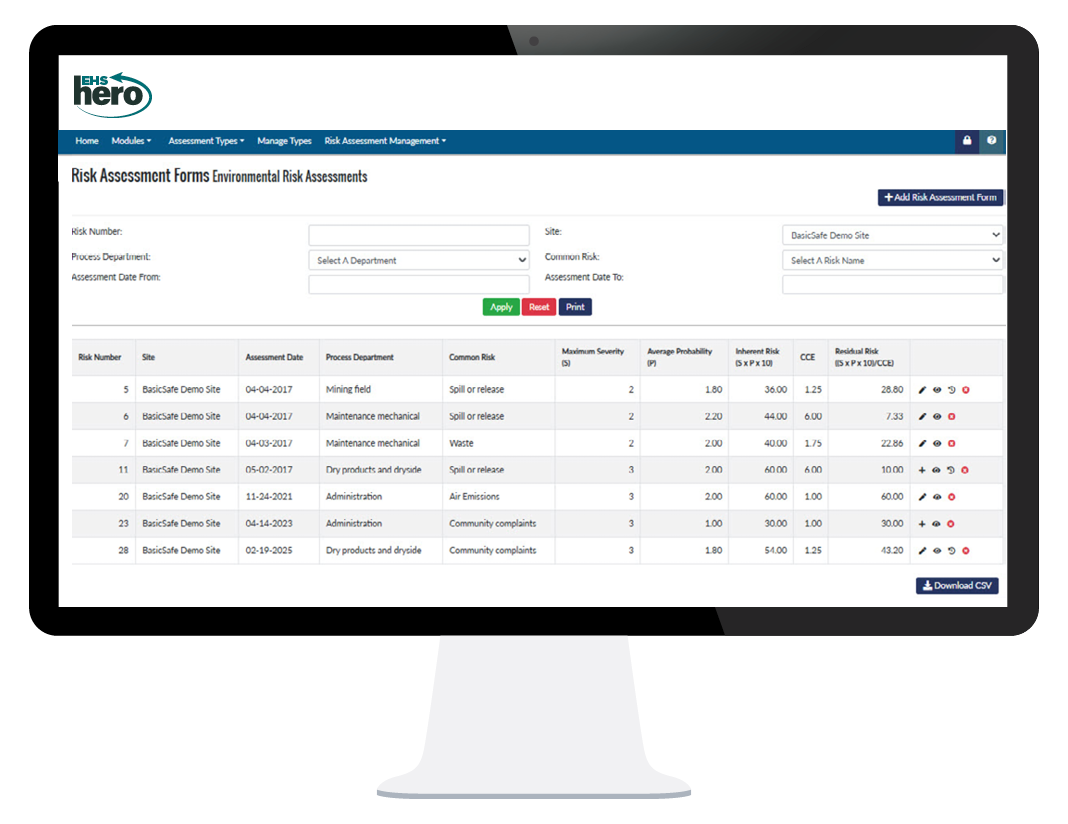
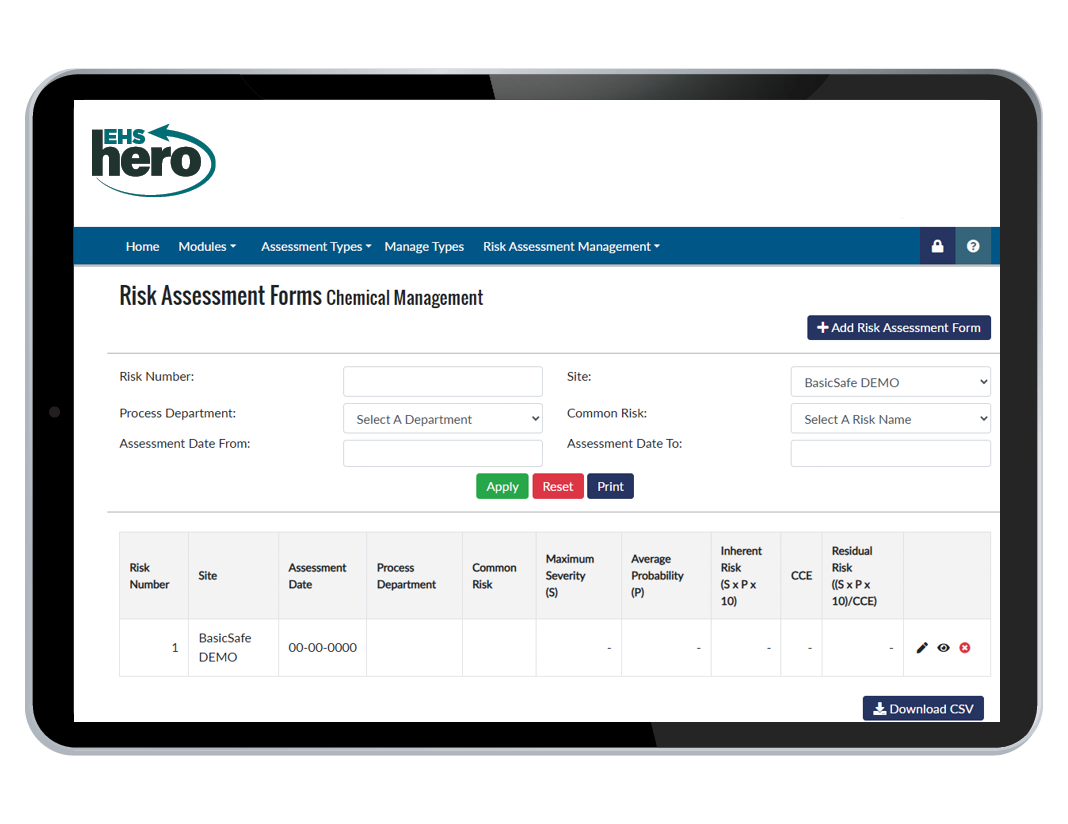
Filter assessments by date, location, hazard type, task, or risk level to quickly locate relevant evaluations.
Automate notifications and alerts
Receive push notifications when risk levels change, new hazards are identified, or mitigation tasks are due—reducing manual tracking and missed follow-ups.