

OSHA training for manufacturing teams done right
Manufacturing safety leaders don’t need to be convinced that training matters. The challenge is making OSHA compliance training consistent, defensible, and effective at scale—especially across multiple shifts, facilities, and risk profiles.
Bureau of Labor Statistics (BLS) data reinforces what most safety professionals already experience firsthand:
- Manufacturing still reports a higher-than-average injury rate, with a total recordable case rate of ~2.7 per 100 workers compared to 2.3 across private industry (BLS SOII data)
- The sector accounted for 391 workplace fatalities in 2023, with equipment contact, exposure, and overexertion leading the majority of serious incidents (BLS CFOI data)
- OSHA continues to cite training-related gaps among top violations, signaling a persistent disconnect between requirements and execution
For experienced EHS leaders, the issue isn’t awareness—it’s operationalizing compliance training in a way that actually reduces risk.
Where OSHA training programs break down
Most manufacturing organizations already have training programs in place. The gaps tend to show up in execution.
Four common areas breakdown occurs:
1. Inconsistent delivery across facilities
Training quality varies by plant, supervisor, or shift. What’s documented centrally often doesn’t reflect what’s actually happening on the floor.
2. Lack of role- and hazard-specific training
Generic OSHA training doesn’t translate to real-world risk. Machine operators, maintenance teams, and supervisors require different levels of depth and context.
3. Documentation that doesn’t hold up
During audits or incidents, incomplete or inconsistent training records create exposure—not just operationally, but legally.
4. Training disconnected from workflows
Training exists separately from incident reporting, audits, and corrective actions, making it difficult to reinforce behaviors or close the loop.
These are not knowledge gaps—they are system and process gaps.
What effective OSHA compliance training looks like today
For manufacturing teams, modern OSHA training needs to do three things simultaneously:
- Align with regulatory requirements
- Reflect real-world operational risks
- Integrate into safety workflows and documentation
That requires moving beyond static training programs to a more structured approach.
Standardize training by role and hazard
One of the most effective ways to improve training outcomes is to organize content based on how work actually happens.
With EHS Hero® Learning Tracks, manufacturing teams can assign training based on:
- Role (supervisors, maintenance, operators)
- Hazard exposure (lockout/tagout, machine guarding, hazardous substances)
- Regulatory requirements tied to specific job functions
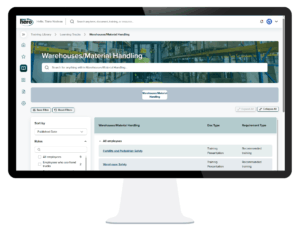
This ensures training is:
- Relevant to the employee’s responsibilities
- Consistent across locations
- Easier to audit and defend
Connect training to real-world compliance workflows
Training is most effective when it’s not isolated.
With EHS Hero Collections, safety leaders can bundle:
- Training content
- OSHA regulatory guidance
- Policies and procedures
- Investigation and audit documentation
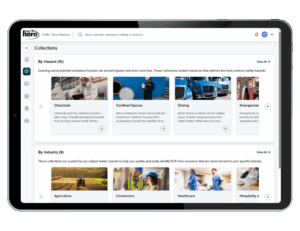
This creates a single source of truth that supports:
- Incident investigations
- Corrective actions
- Ongoing compliance audits
Instead of searching across systems, teams can access everything tied to a specific hazard or compliance requirement in one place.
Reinforce training with consistent delivery and tracking
Even strong content fails without consistent execution.
With TrainingToday®, manufacturing teams can:
- Assign OSHA-aligned training across sites and shifts
- Deliver consistent, expert-developed courses
- Track completion and engagement
- Automate reminders and compliance reporting
TrainingToday courses cover core manufacturing risks, including:

- Lockout/tagout (LOTO)
- Hazard communication
- Machine safety
- Ergonomics and injury prevention
- Incident response and reporting
Preview TrainingToday courses.
Why this matters: linking training to risk reduction
Manufacturing incidents are rarely caused by a lack of policies, they’re caused by breakdowns in execution.
The most common injury drivers: equipment contact, hazardous exposure, and overexertion, are directly tied to behavior, training quality, and reinforcement
When training is:
- Role-specific
- Reinforced through workflows
- Properly documented
…it becomes a risk control, not just a requirement.
A more practical approach to OSHA compliance
For experienced safety professionals, the goal isn’t more training—it’s better alignment between training, operations, and compliance requirements.
That means:
- Standardizing training across facilities
- Aligning content with real hazards
- Integrating training into incident and audit workflows
- Ensuring documentation is audit-ready and defensible
BLR’s combination of EHS Hero® and TrainingToday® is designed to support exactly that—helping manufacturing teams turn compliance training into a measurable part of their safety strategy.
Take the next step
If your team is working to improve consistency, defensibility, and impact of OSHA training:
Explore EHS Hero.
Preview TrainingToday courses.